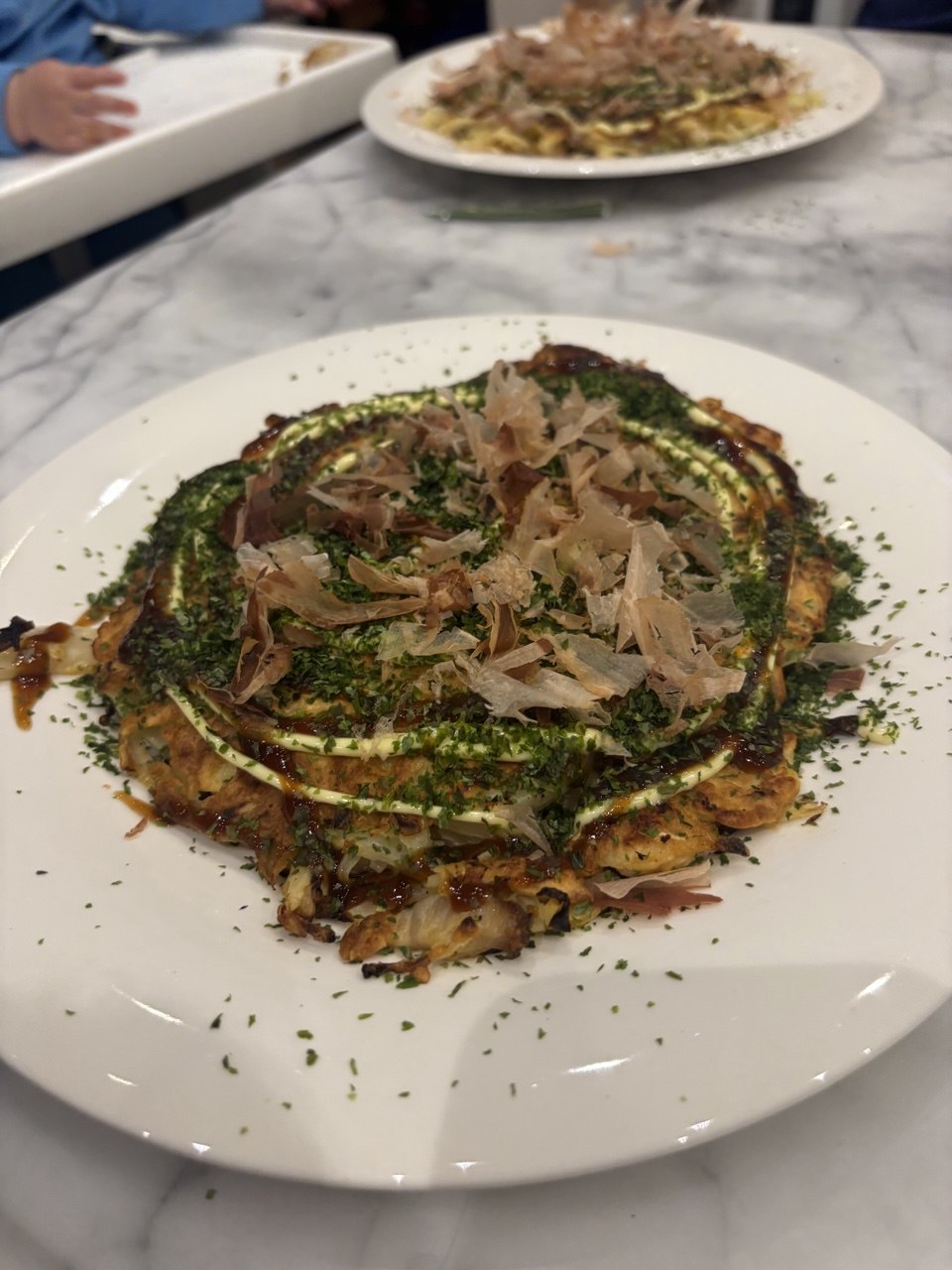
Dr. P's Lighter Okonomiyaki
A crispy, cabbage-packed Japanese savoury pancake topped with tangy okonomiyaki sauce, swirled Japanese mayo, dried seaweed and dancing bonito flakes, with less refined starch and fat than the classic.
Nutrition per serving
In the clinic
Okonomiyaki this version
Compared to Okonomiyaki (BBC Good Food)
The classic Osaka-style version uses plain white flour, a generous pour of oil, full-fat Japanese mayo and a heavy hand of sweet okonomiyaki sauce
| Per serving | Okonomiyaki | This recipe | Difference |
|---|---|---|---|
| Calories | 527 kcal | 310 kcal | −41% |
| Carbs | 39g | 28g | −28% |
| Fat | 31g | 12g | −61% |
| Saturated fat | 6g | 2g | −67% |
| Sugar | 15g | 6g | −60% |
| Sodium | 760mg | 610mg | −20% |
| Fibre | 7g | 5g | −29% |
| Protein | 20g | 18g | −10% |
What changed
-
Plain white flour as the sole base Half plain flour, half gram (chickpea) flour
Gram flour roughly doubles the protein and fibre content while lowering the glycaemic load of the batter
-
3–4 tbsp neutral oil for frying 1 tsp toasted sesame oil plus a light spray of rapeseed oil
Cuts total fat significantly and replaces saturated frying oil with heart-friendlier unsaturated fats
-
Full-fat Japanese mayonnaise, used freely Light Japanese-style mayo applied in a thin swirl
Preserves the signature look and creaminess while roughly halving the saturated fat from the topping
-
Shop-bought okonomiyaki sauce (high sugar and sodium) A small-batch homemade sauce using reduced-salt Worcestershire, tomato paste and a touch of honey
Cuts sodium by around a third and lets you control the added sugar without losing the sticky, tangy flavour
Per serving. Our figures are estimates; the comparison's are the published nutrition of the BBC Good Food recipe.
Priyanka shared this gorgeous okonomiyaki in the family group chat, and it is easy to see why. This Japanese savoury pancake is a brilliant crowd-pleaser, and our clinic version trims the refined flour and oil without sacrificing that satisfying, umami-rich finish.
Ingredients
- 400 g White cabbage, very finely shredded
- 4 Spring onions, finely sliced, white and green parts separated
- 75 g Plain flour
- 75 g Gram (chickpea) flour
- 200 ml Cold dashi stock, or cold water with 1 tsp reduced-salt soy sauce
- 4 Medium eggs, lightly beaten
- 150 g Cooked chicken breast, shredded, or raw tiger prawns
- 1 tsp Toasted sesame oil
- Rapeseed oil spray, for the pan
- 2 tbsp Reduced-salt Worcestershire sauce
- 1 tbsp Tomato paste
- 1 tsp Honey
- 1 tsp Reduced-salt soy sauce
- 3 tbsp Light Japanese-style mayo
- 8 g Aonori (dried green seaweed flakes)
- 10 g Katsuobushi (bonito flakes)
- Black pepper, to taste
Compared to Okonomiyaki (BBC Good Food)
41% fewer calories28% less carbs60% less sugar61% less fat Full comparison ↑Instructions
Make the sauce first: stir together the Worcestershire sauce, tomato paste, honey and soy sauce in a small bowl until smooth, then set aside.
In a large mixing bowl, whisk together the plain flour, gram flour and dashi stock until you have a smooth, lump-free batter.
Add the beaten eggs and a good grind of black pepper, then whisk again briefly to combine.
Fold the shredded cabbage, the white parts of the spring onions, and the shredded chicken (or raw prawns) into the batter, making sure everything is well coated.
Add the sesame oil to the batter and stir through.
Place a large non-stick frying pan over a medium heat and spray lightly with rapeseed oil. Once hot, spoon in a quarter of the batter and press gently into a round approximately 15 cm across.
Cook for 5 to 6 minutes until the underside is deep golden and the edges look set, then flip carefully and cook for a further 4 to 5 minutes. Repeat with the remaining batter to make four pancakes.
Transfer each pancake to a plate. Brush or drizzle with the homemade okonomiyaki sauce, then use a spoon or piping bag to swirl the light mayo in concentric circles across the top.
Scatter generously with aonori and the green spring onion tops, then pile bonito flakes over the centre so they catch the heat and begin to wave.
Serve immediately while the pancakes are hot and the bonito is still dancing.