Cheese and Sage Scones
Flaky, cheesy scones fragrant with fresh sage, made lighter by swapping most of the full-fat cheese for a reduced-fat variety and using low-fat buttermilk for a tender, flavourful crumb.
Nutrition per serving
In the clinic
Classic cheese scones this version
Compared to Classic cheese scones (BBC Good Food)
Classic version made with full-fat butter, full-fat mature cheddar and whole milk or cream, producing a rich but high-saturated-fat bake.
| Per serving | Classic cheese scones | This recipe | Difference |
|---|---|---|---|
| Calories | 300 kcal | 260 kcal | −13% |
| Carbs | 30g | 32g | +7% |
| Fat | 16g | 10g | −37% |
| Saturated fat | 10g | 5g | −50% |
| Sugar | 1g | 2g | +100% |
| Sodium | 480mg | 380mg | −21% |
| Fibre | 2g | 1g | −50% |
| Protein | 9g | 9g | no change |
What changed
-
Full-fat butter (75 g) A mix of reduced-fat butter and a little cold olive oil (50 g total)
Replaces a portion of saturated fat with unsaturated fat, which is gentler on LDL cholesterol
-
Full-fat mature cheddar throughout Half reduced-fat cheddar, half parmesan for flavour punch
Cuts saturated fat substantially while parmesan's intensity means you need less cheese overall to get the same savoury hit
-
Whole milk Low-fat buttermilk
Reduces fat content and the mild acidity reacts with raising agents to give a lighter, more tender crumb without added richness
Per serving. Our figures are estimates; the comparison's are the published nutrition of the BBC Good Food recipe.
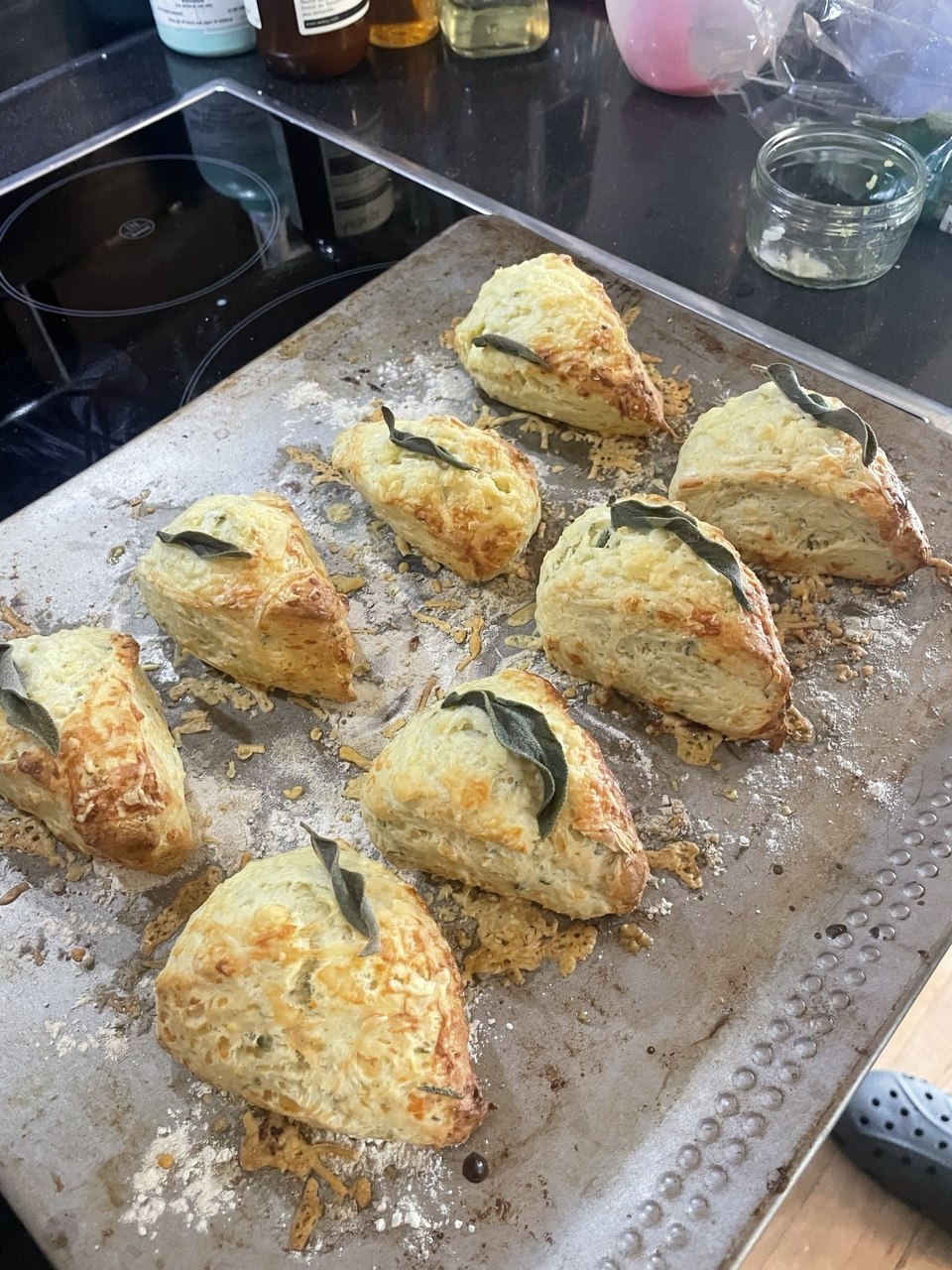
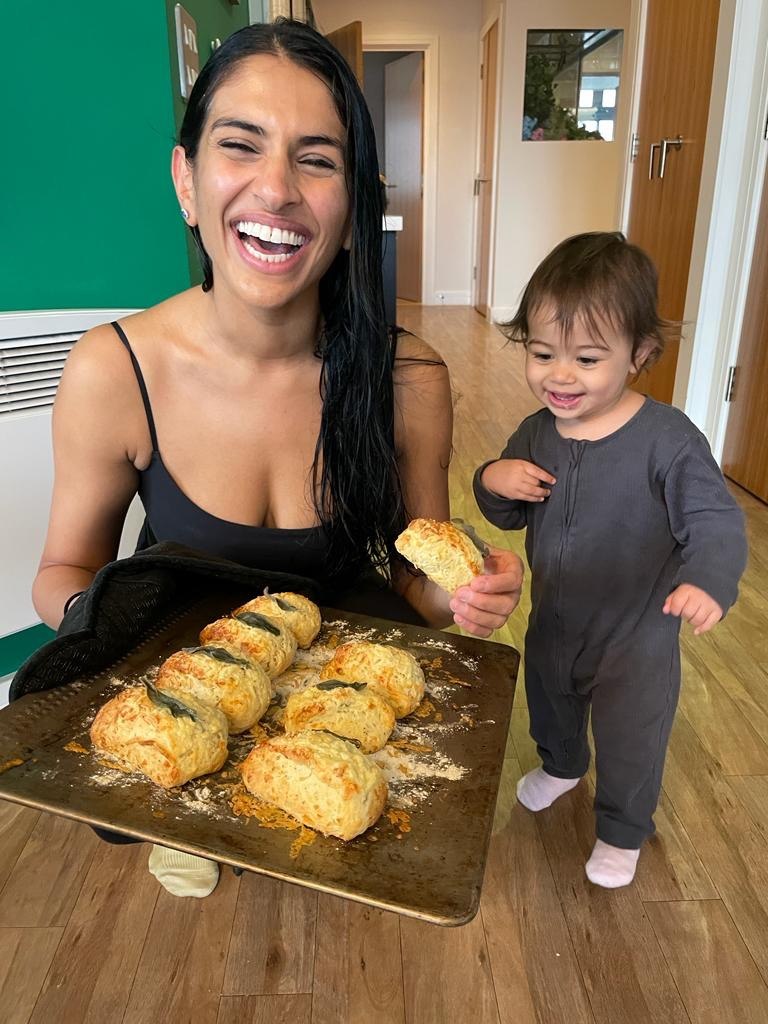
Priyanka just shared these golden beauties fresh from the oven in the family group chat. Triangular cheese scones crowned with crisp whole sage leaves - a proper savoury bake that feels indulgent but has been quietly made a little kinder to your heart.
Ingredients
- 300 g Self-raising flour, plus extra for dusting
- 1 tsp Baking powder
- 0.5 tsp Fine sea salt
- 0.5 tsp Mustard powder
- 0.25 tsp Freshly ground black pepper
- 35 g Reduced-fat butter, cold, cut into small cubes
- 15 ml Cold-pressed olive oil
- 80 g Reduced-fat mature cheddar, coarsely grated
- 30 g Parmesan, finely grated
- 10 Fresh sage leaves, 8 finely chopped, 8 reserved whole for topping
- 160 ml Low-fat buttermilk, plus a little extra if needed
- 1 Medium egg, beaten, for glazing
Instructions
Preheat your oven to 220 °C (200 °C fan) and lightly flour a large baking tray.
Sift the flour, baking powder, salt, mustard powder and black pepper together into a large bowl.
Add the cold butter cubes and rub them into the flour with your fingertips until the mixture resembles coarse breadcrumbs, then drizzle in the olive oil and stir briefly to combine.
Stir in the grated cheddar, parmesan and the finely chopped sage leaves, distributing them evenly through the flour mixture.
Make a well in the centre, pour in the buttermilk and mix quickly with a table knife until a shaggy dough just comes together. Add an extra tablespoon of buttermilk only if the dough seems too dry: overworking makes scones tough.
Turn the dough out onto a lightly floured surface and pat it gently into a rectangle about 3 cm thick. Cut into 8 triangles with a sharp knife.
Place the triangles on the prepared tray, spaced slightly apart. Brush the tops with beaten egg, then press one whole sage leaf onto the top of each scone.
Bake for 18 to 20 minutes until well risen, deep golden and the sage leaves are crisped. A scone should sound hollow when tapped on the base.
Cool on a wire rack for at least 5 minutes before serving. These are best eaten warm on the day of baking, but will keep in an airtight tin for up to 2 days.