Blackberry Jam
Blackberry jam made with half the sugar of the classic recipe, so the fruit leads and the set still holds.
Nutrition per serving
In the clinic
Blackberry jam this version
Compared to Blackberry jam (BBC Good Food)
1.5 kg jam sugar to 1.8 kg blackberries.
| Per serving | Blackberry jam | This recipe | Difference |
|---|---|---|---|
| Calories | 44 kcal | 38 kcal | −14% |
| Carbs | 12g | 9g | −25% |
| Sugar | 12g | 8.4g | −30% |
| Added sugar | 11.4g | 7.5g | −34% |
What changed
-
1.5 kg jam sugar to 1.8 kg blackberries 750 g jam sugar to the same fruit
Half the added sugar. The fruit's own sugar stays, so a spoonful has about a third less sugar in total, and the jam tastes of blackberries rather than sweetness.
-
A long boil to set a high-sugar mix Jam sugar with pectin and plenty of lemon juice
Pectin and acid do the setting that the missing sugar would otherwise do.
Per serving. Our figures are estimates; the comparison's are the published nutrition of the BBC Good Food recipe.
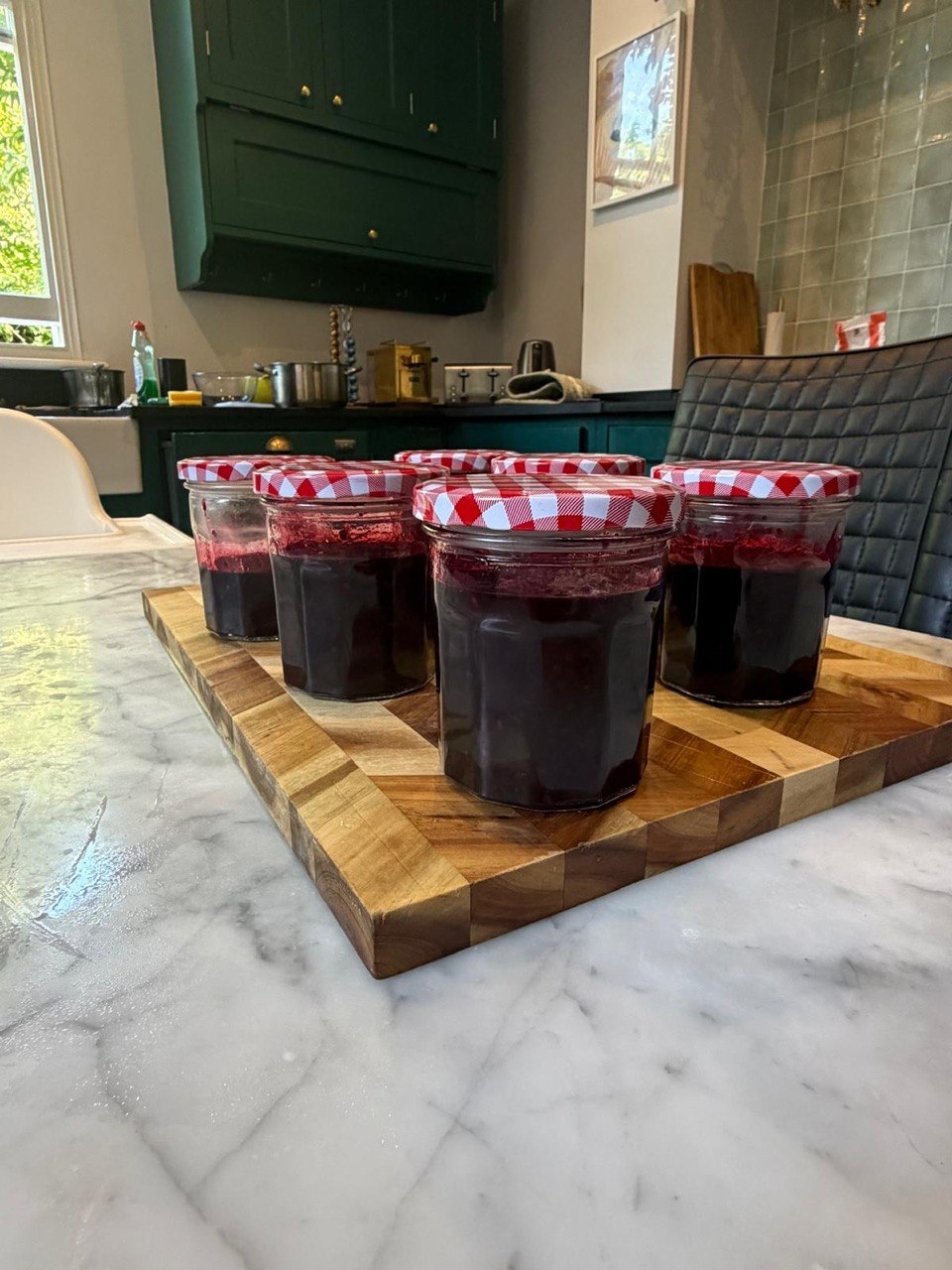
Nick’s just shared these gorgeous jars of deep, jewel-toned blackberry jam in the family chat. Made in a proper batch and sealed up in classic red-checked lids, this is preserving at its most satisfying.
Ingredients
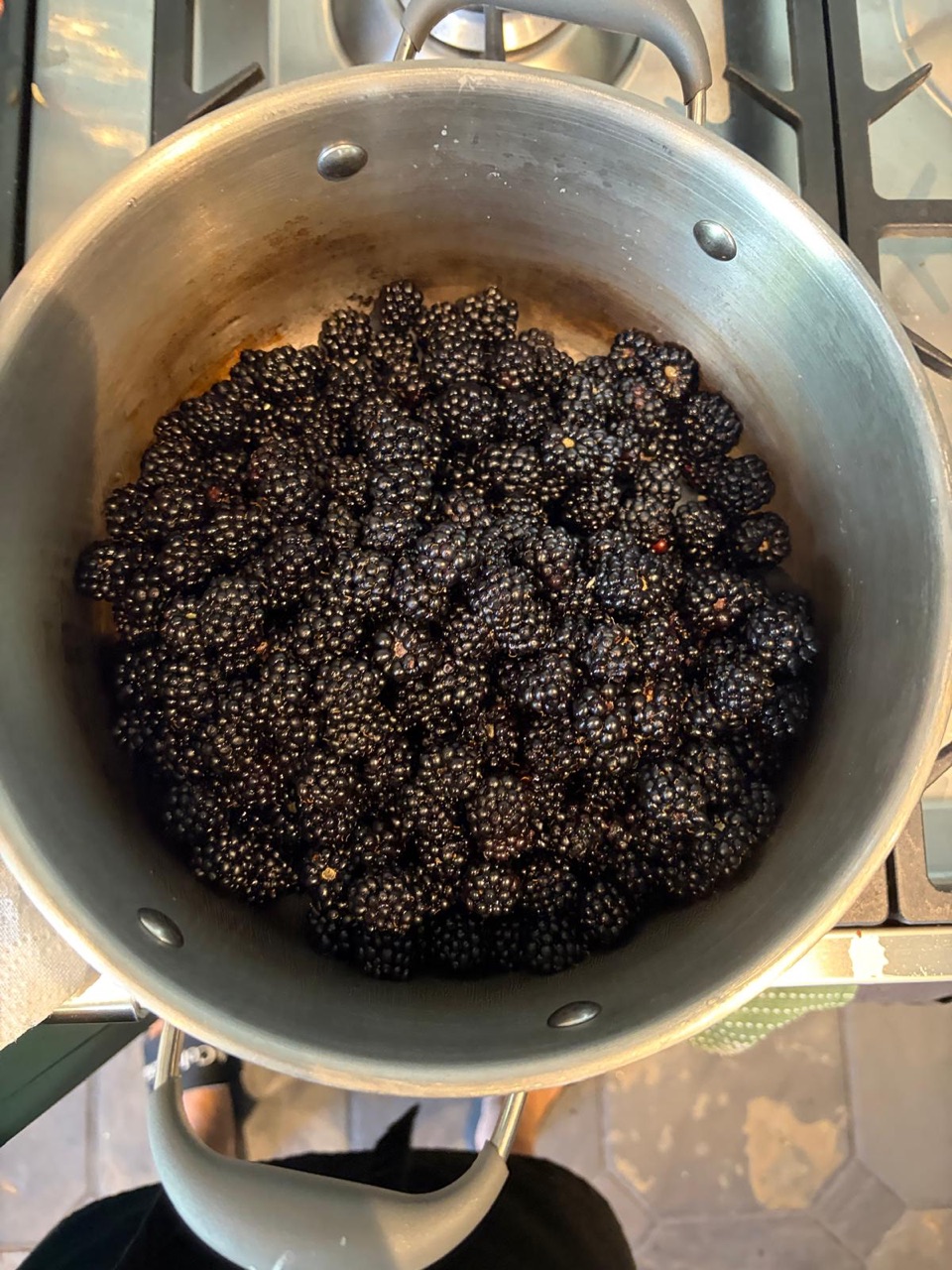
- 1.8 kg Blackberries, fresh or frozen
- 750 g Jam sugar, the one with added pectin
- 1 Lemon, juice and pips
- 1 tsp Butter, optional, to reduce surface foam; leave out for vegan
Compared to Blackberry jam (BBC Good Food)
14% fewer calories25% less carbs34% less added sugar Full comparison ↑Instructions
Sterilise five 370 ml jam jars and their lids by washing them in hot soapy water, rinsing well, then placing upright in an oven at 140 °C (fan 120 °C) for 15 minutes. Leave them in the oven until needed.
Place a small saucer in the freezer: you will use this to test the set later.
Put the blackberries into a large, wide, heavy-based saucepan or preserving pan. Add the lemon juice, and the pips tied in a small square of muslin.
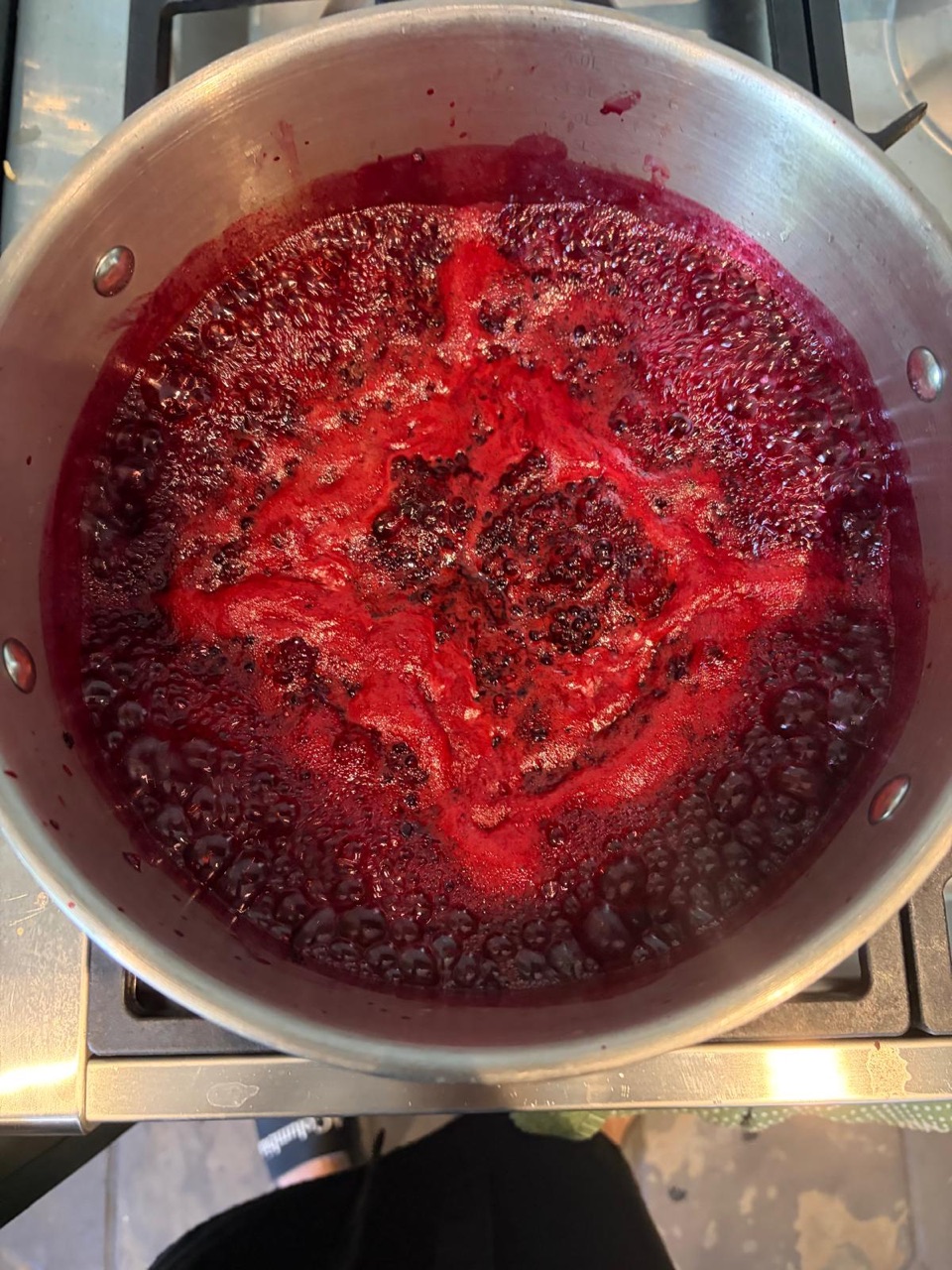
Cook the fruit over a medium heat for 8 to 10 minutes, stirring occasionally and pressing the fruit down gently with the back of a spoon, until it has broken down and released its juices.
Add the sugar and stir continuously over a low heat until every grain has dissolved completely. Do not allow the mixture to boil at this stage.
Once the sugar has dissolved, increase the heat to a rolling boil and cook hard for 8 to 12 minutes without stirring. If you have a sugar thermometer, you are aiming for 105 °C.
To test the set without a thermometer, drop a small spoonful of jam onto the cold saucer, wait 30 seconds, then push it with your finger. If it wrinkles, the jam is ready. If not, boil for a further 2 minutes and test again.
Remove the pan from the heat, lift out the muslin of pips, stir in the butter if using, then skim off any foam from the surface with a spoon.
Leave the jam to cool in the pan for 10 minutes so that the fruit does not all float to the top of the jars.
Carefully ladle the jam into the sterilised jars using a jam funnel if you have one, filling to within 5 mm of the rim. Seal the lids tightly while still hot, then leave to cool completely on a wooden board or folded tea towel.
Label the jars with the date. With half the sugar it keeps less long than a classic jam: store in a cool, dark cupboard for up to 6 months, then refrigerate after opening and use within 4 weeks.