Boulangère Potatoes
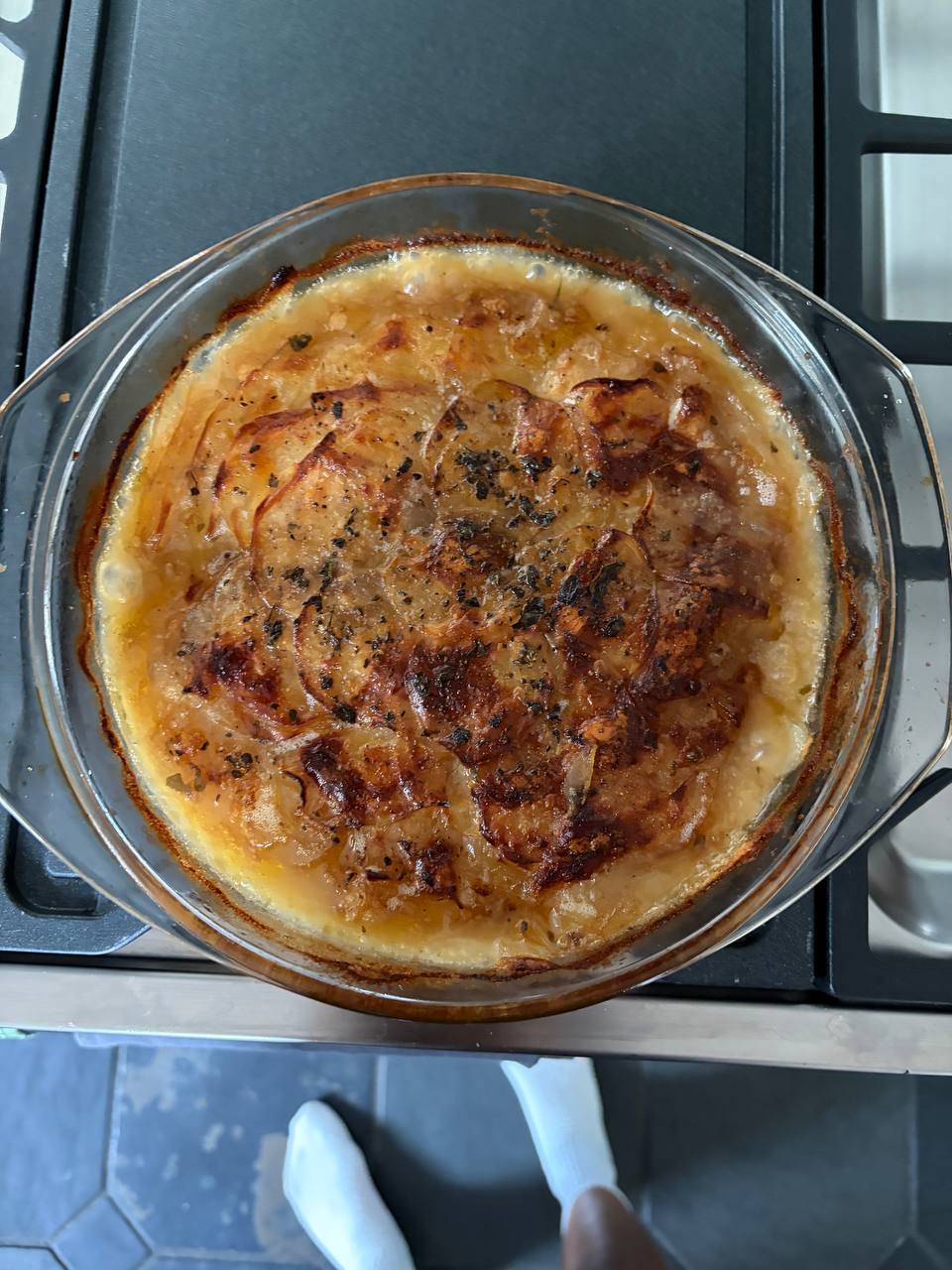
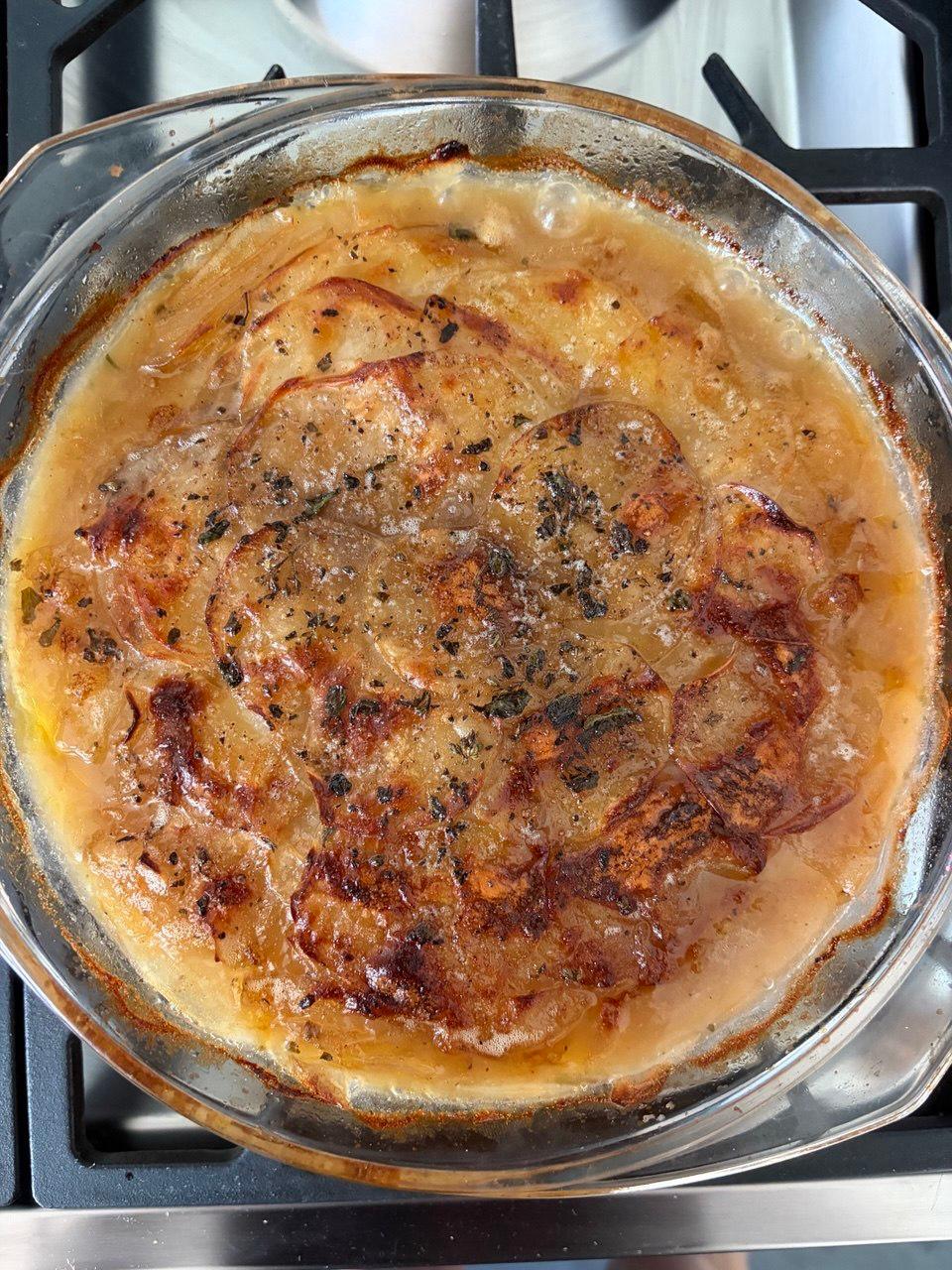
Thinly sliced potatoes and sweet onions slow-baked in herbed stock until meltingly tender with a beautifully golden, crisp top. All the comfort, with far less fat than a traditional gratin.
Nutrition per serving
In the clinic
Potatoes dauphinoise this version
Compared to Potatoes dauphinoise (BBC Good Food)
Baked in double cream and full-fat milk, finished with parmesan
| Per serving | Potatoes dauphinoise | This recipe | Difference |
|---|---|---|---|
| Calories | 289 kcal | 285 kcal | −1% |
| Carbs | 30g | 52g | +73% |
| Fat | 17g | 6g | −65% |
| Saturated fat | 9g | 3g | −67% |
| Sodium | 80mg | 380mg | +375% |
| Fibre | 2g | 5g | +150% |
| Protein | 7g | 6g | −14% |
What changed
-
Double cream and full-fat milk Hot stock
Stock carries the flavour into the potatoes without the saturated fat that cream brings
-
Parmesan on top Thyme, rosemary and slow-cooked onions between the layers
The herbs and sweet onions give the savoury depth, so the dish needs no cheese
Per serving. Our figures are estimates; the comparison's are the published nutrition of the BBC Good Food recipe.
Priyanka’s just shared this golden, bubbling boulangère from the family group chat: a classic French bake that layers thinly sliced potatoes and onions in a savoury stock rather than cream, making it naturally lighter without sacrificing any of that gorgeous caramelised depth.
Ingredients
- 1000 g floury potatoes, such as Maris Piper, peeled and very thinly sliced (2–3 mm)
- 3 large onions, peeled and finely sliced into half-moons
- 3 cloves garlic, finely sliced
- 500 ml good-quality vegetable or chicken stock, hot
- 20 g unsalted butter, plus extra for greasing
- 1 tbsp olive oil
- 2 tsp fresh thyme leaves, or 1 tsp dried thyme
- 1 tsp fresh rosemary, finely chopped
- flaky sea salt and freshly ground black pepper, to taste
Instructions
Preheat your oven to 180 °C fan (200 °C conventional / Gas Mark 6) and lightly grease a round or rectangular oven-safe dish (roughly 25 cm diameter) with a little butter.
Heat the olive oil and half the butter in a large frying pan over a medium heat. Add the sliced onions and a pinch of salt, and cook gently for 12–15 minutes, stirring occasionally, until softened and beginning to turn golden. Add the garlic for the final 2 minutes, then remove from the heat.
Arrange a single layer of potato slices across the base of the prepared dish, overlapping them slightly like fish scales. Season lightly with salt, pepper, and a scattering of thyme and rosemary.
Spoon over a thin layer of the softened onion and garlic mixture. Continue building layers of potato and onion, seasoning and adding herbs as you go, until all the potato and onion are used up. Finish with a neat top layer of potato slices.
Pour the hot stock slowly and evenly over the layered potatoes. It should come just to the level of the top layer without submerging it. Dot the remaining butter across the surface.
Cover the dish tightly with foil and bake in the preheated oven for 45 minutes, until the potatoes are just tender when pierced with a knife.
Remove the foil and return the dish to the oven for a further 25–30 minutes, until the top is deeply golden, caramelised, and crisp at the edges.
Remove from the oven and allow to rest for 5–10 minutes before serving. This helps the layers settle and makes it easier to portion.